


“Landscape Photography”
When I began taking photography seriously around 2003, the first name that stuck with me was Ansel Adams. I imagine that is the case with nearly everyone who entered into the world of photography from the 1970’s until the 2010’s. Adams didn’t just write the book, he wrote the trilogy. Even when I was in college, The Camera, The Negative, and The Print were mandatory reading.
If you know anything about Adams, you know he was a “Landscape Photographer”, and not just a landscape photographer, but The landscape photographer. While I do believe that almost all photographers owe at least some debt of gratitude to his work popularizing the medium, there is a certain tyranny to his legacy. In many ways, his “grand landscapes” define what we think of when we think of landscape photography.
Do a search on any internet platform for landscape photography and you’ll encounter people traveling to exotic and majestic places to capture the “perfect” moment. This is of course a perversion of Adams’ legacy, he most often photographed the areas he lived. Still our image of the Landscape is shaped by his legacy of awe-inspiring, pin-sharp, images of extraordinary places.
In 2006 I was introduced to Frederick Sommer’s Arizona Landscapes. These are photos that were taken midday in the middle of relatively unremarkable stretches of desert, and not photogenic sand dunes, just the scraggly, rocky Arizona landscape. All of these photos are taken to minimize the horizon, most often leaving the sky out of the image entirely. No dramatic light. No dramatic landscape features. When I first saw them, I immediately skipped over them, until a mentor stopped me and told me to give each of them a full minute to sink in. They became some of my favorite photos.
In the context of contemporary landscape photography and the legacy of Ansel Adams, many would be shocked to learn that Sommer’s landscape often had shared and equal billing to Adams’s landscapes and the two saw each other as peers and had great respect for the other’s work.
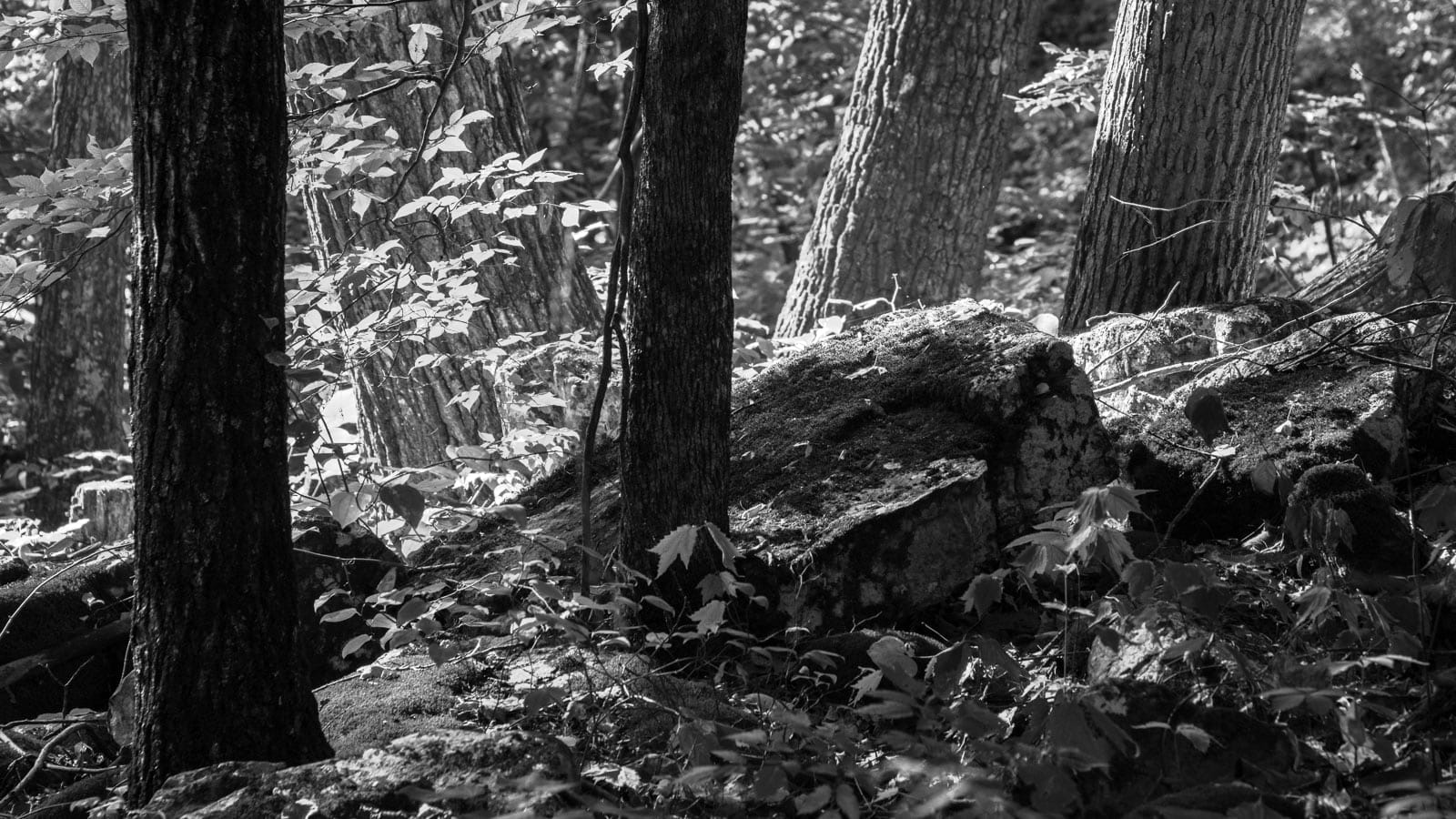
During the lockdowns of 2020 I decided I wanted to learn contemporary landscape photography. Prior to the pandemic I would never have considered myself to be a nature or landscape photographer, but with social distancing and access to multiple trailhead on three different mountain ranges within a 20 min drive, I thought it would be a safe way to get out of the house.
I looked around online and people kept pointing toward a handful of YouTuber landscape photographers, which I promptly checked out. What I saw wasn’t for me, but I knew that what they were doing was the popular aesthetic and the generally accepted method and practice. So I set about learning the technical and compositional skills these popular landscape photographers used. I won’t say that I ever mastered it, but I become reasonably competent at the workflows and techniques. At the same time, I really grew to dislike the limited vision many of these people had. It was very “commercial” minded. It felt like the reason behind their photographs and the why behind their techniques was almost entirely oriented toward selling prints, online courses, and winning awards. I’ve watch hours of these people talking about photography and I have no idea what moves them to create.
When I look back at Adams, I see the opposite. Everyone around talked technique and about getting the end result but Ansel wanted to talk about the art, the inspiration, and the music of his work. He knew that mastering technique was a means to an end. While I was tempted by the idea of starting a career in the field and leading photo tours, starting a YouTube channel, and trying to make a living, I saw the way those platforms cheapened and hollowed out many good photographers. Instead I took the lesson I’d learned from Adams and focused on what I had to say.
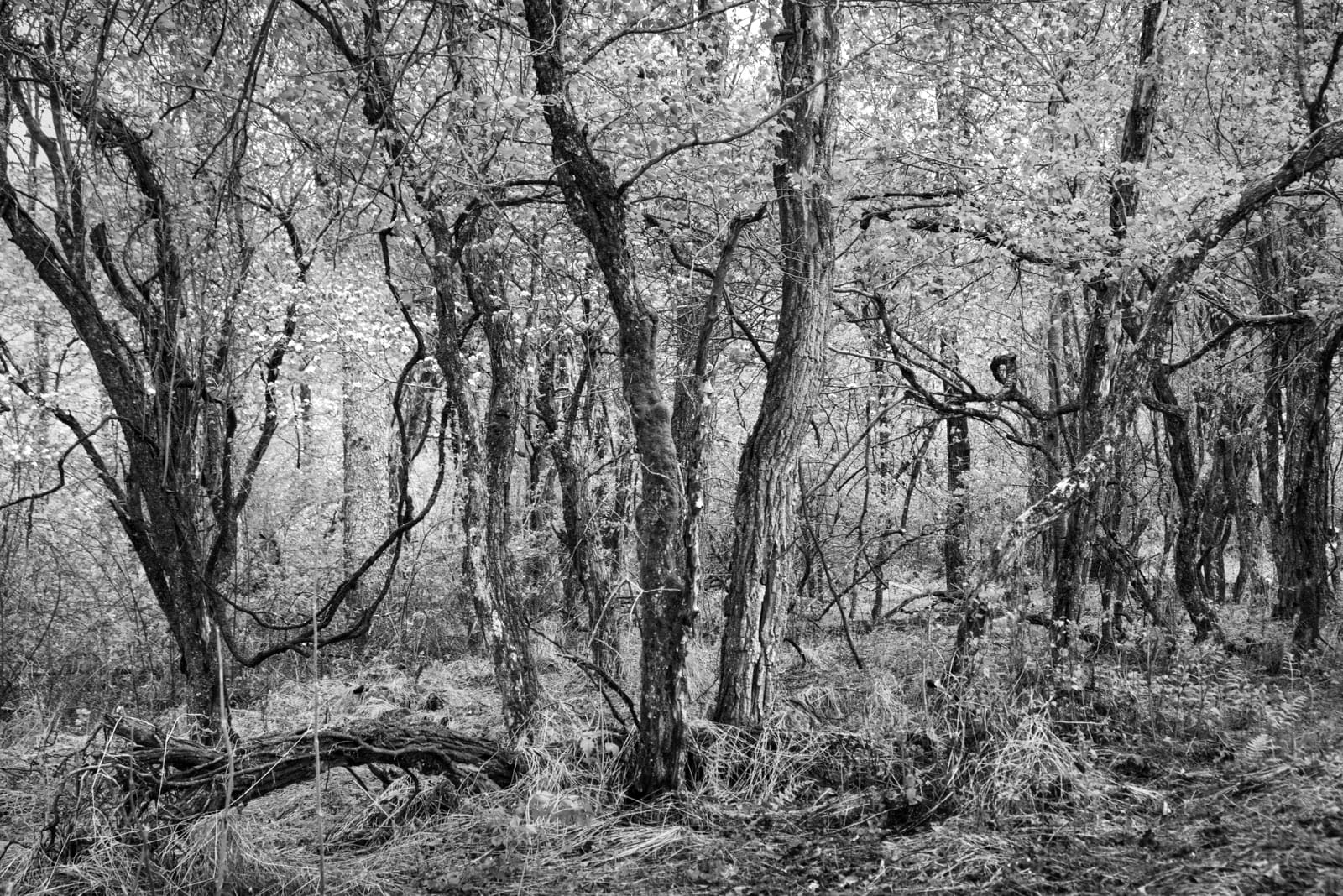
So, that brings me to the portfolio at the top of this page. It is my take on the forest landscape. These photos are messy, chaotic, subtle, busy, loud, chaotic, and complex – things that I’d learned were wrong. They are however, the truth. None of my photos look like the scenes did in reality, instead they are the truth of what was in me and what moved me to create them. They are my version of Landscape Photography. While I’m not sure what either Adams or Sommer would think of the images, I’m fairly certain that they would understand why they were made and why they are the way they are.
Leave a Reply